
Table of Contents
Who This Diet Chart Is For
This Indian weight loss plan is designed specifically for:
-
Indian women aged 20–50 who have 5–15 kg to lose and want a safe, realistic approach.
-
Working professionals and homemakers who need easy, repeatable meals without expensive “diet foods.”
-
Women with mild PCOS or thyroid issues (after consulting a doctor) who require balanced meals with stable blood sugar.
-
First‑time dieters who have tried crash diets or skipping meals and want a long‑term solution.
If you are pregnant, breastfeeding, or have a diagnosed medical condition (such as diabetes or kidney disease), please consult a registered dietitian before making major dietary changes.
Key Takeaways
- A weight loss diet chart for female should be based on 1200–1500 calories using the ICMR‑NIN “My Plate” method: 50% vegetables, 25% whole grains/millets, 25% protein.
- NFHS‑5 data shows 24% of Indian women are overweight or obese; 40% have abdominal obesity – making sustainable diet planning a health priority.
- The most common barriers for Indian women are hormonal issues, high‑carb traditional diets, sedentary lifestyles, and emotional eating.
- Safe weight loss is 0.5–1 kg per week – realistic, not dramatic.
- Combine this diet chart with daily movement (30–45 minutes) and adequate sleep for best results.
Who Should Avoid or Be Cautious
-
Pregnant or breastfeeding women – Calorie needs are higher; weight loss should only be attempted under medical guidance.
-
Individuals with uncontrolled diabetes – Calorie restriction may affect blood sugar; a specialised plan is safer.
-
Women with eating disorder history – Structured diet plans can sometimes trigger unhealthy behaviours.
-
Adolescents under 18 – Growing bodies require higher fuel; focus on healthy eating rather than active weight loss unless advised by a doctor.
If you fall into any of these groups, speak with a healthcare professional before following this plan.
Common Weight Loss Challenges for Indian Women
Understanding why weight loss can be difficult makes it easier to overcome the hurdles. Based on leading Indian health platforms, the most common barriers for Indian women include:
| Challenge | Why It Happens | What You Can Do |
|---|---|---|
| Hormonal issues (PCOS, thyroid) | Slows metabolism and increases belly fat storage | Prioritise low‑GI foods and adequate protein |
| Carb‑heavy traditional meals | White rice, refined roti, and fried snacks cause insulin spikes | Replace with brown rice, multigrain rotis, and millets |
| Sedentary lifestyle | Desk jobs, long commutes, and household stress reduce activity | Add 30‑45 minutes of walking, yoga, or home workouts daily |
| Emotional and stress eating | High cortisol levels trigger cravings for sweets and fried foods | Practice mindful eating and keep healthy snacks ready |
| Late dinners | Large meals close to bedtime impair metabolism | Aim to finish dinner by 7:30–8:00 PM |
Key Nutritional Principles for Indian Women on a Weight Loss Diet
Protein – For weight loss and muscle preservation, women should aim for 1.2–1.6 grams of protein per kilogram of body weight daily. Good Indian sources: eggs, dal, paneer, sprouts, chicken, fish, and curd.
Complex carbohydrates – Choose low‑GI options like brown rice, jowar roti, ragi, oats, and quinoa instead of white rice and maida products.
Fibre – Aim for 25–30 g of fibre daily through vegetables, fruits, whole grains, and legumes. Fibre keeps you full longer and improves digestion.
Healthy fats – Limit total fat to 30% of daily calories, with less than 7% from saturated fats. Use ghee in moderation, include nuts and seeds, and avoid fried snacks and trans fats.
Hydration – Drink 8–12 glasses of water daily (approximately 2–3 litres), adjusted for activity level and climate. Start each morning with warm water and lemon.
Why Indian Women Need a Different Approach
Recent ICMR‑INDIAB research found that 43% of Indian adults are overweight and 26% obese by Asian cut‑offs despite India’s median BMI of 22.2 appearing moderate.
Even more striking: 56.4% of India’s total disease burden is linked to poor dietary habits, according to a 2024 ICMR report. The same report found that up to 80% of Type 2 diabetes cases could be prevented with the right lifestyle changes.
For women specifically:
-
24% of Indian women aged 15–49 are now overweight or obese (NFHS‑5 data).
-
40% of Indian women have abdominal obesity – excess fat around the waist linked to higher metabolic risk. This figure affects over 50% of women aged 30–49.
-
Obesity prevalence among Indian women increased from 12.3% in NFHS‑3 (2006) to 23.6% in NFHS‑5 (2021).
These statistics show that weight management is not about vanity; it is a health priority for millions of Indian women today.
Benefits and Drawbacks of a Structured Diet Chart
Benefits
-
Provides clear, actionable guidance; you know exactly what to eat each day.
-
Reduces decision fatigue and unhealthy last‑minute choices.
-
Uses local, affordable Indian ingredients.
-
Supports hormonal balance through proper macronutrient distribution.
Drawbacks
-
May feel repetitive if followed for many weeks without swapping options.
-
Requires meal preparation time (approximately 30–45 minutes extra daily).
-
Not suitable for everyone without medical clearance.
Solution: Use the swap options provided to vary meals while keeping portions and food groups consistent.
How to Prepare for a Weight Loss Diet
Before starting, take these three practical steps:
-
Measure your current portion sizes – Use a small katori or a measuring cup to understand how much dal, rice, or sabzi you normally eat. You may be surprised!
-
Stock your kitchen – Keep dals, whole grains, fresh vegetables, fruits, nuts, and spices readily available. Remove or hide packaged snacks and sugary items.
-
Plan your meals weekly – Sit down on Sunday evening to plan the week’s menu. This saves time and prevents unhealthy last‑minute orders.
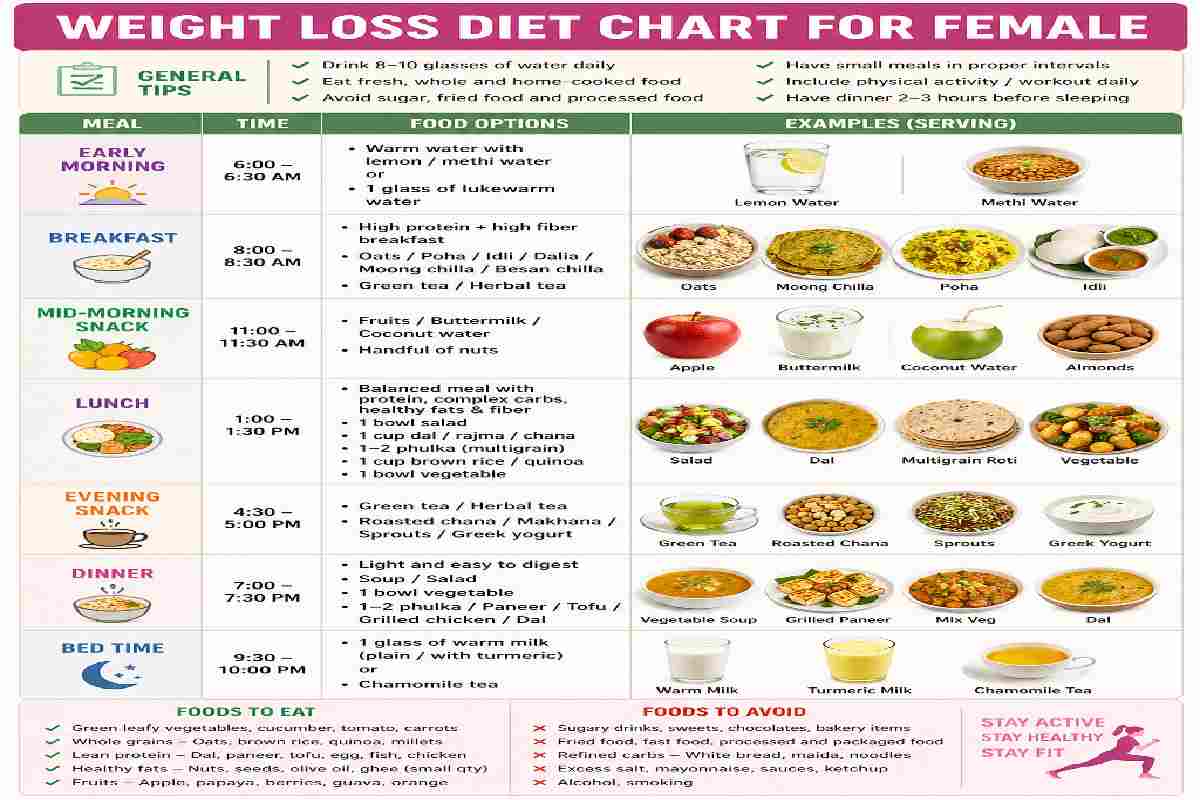
7-Day Indian Weight Loss Diet Chart for Female (1200–1500 Calories)
The following menu is adapted from clinically reviewed Indian weight loss plans and uses common, affordable ingredients.
| Day | Breakfast | Mid‑Morning Snack | Lunch | Evening Snack | Dinner |
|---|---|---|---|---|---|
| Day 1 | 2 moong dal chillas + mint chutney | 1 apple | 1 multigrain roti + 1 bowl bhindi sabzi + 1 bowl dal + salad | 1 cup green tea + handful roasted chana | 1 bowl vegetable soup + 1 bowl sautéed paneer/ tofu |
| Day 2 | 1 bowl vegetable oats upma + 1 boiled egg (optional) | 1 pear | ½ cup brown rice + 1 bowl rajma + 1 bowl curd | 1 fruit (guava) + 5 soaked almonds | Grilled fish (or 1 bowl soya chunk curry) + sautéed spinach |
| Day 3 | 2 besan chillas with grated vegetables | 1 small bowl sprouts | 1 jowar roti + 1 bowl palak paneer + cucumber raita | 1 cup coconut water + handful roasted makhana | 1 bowl moong dal khichdi + 1 bowl curd |
| Day 4 | 1 bowl poha with peanuts + vegetables | Handful of walnuts + black coffee (no sugar) | 1 multigrain roti + 1 bowl chana masala + mixed veg salad | 1 cup herbal tea + 1 bowl fruit | 1 bowl tomato soup + grilled chicken/tofu + sautéed mushrooms |
| Day 5 | 1 bowl curd + handful of berries + 1 tsp flaxseed | 1 orange | ½ cup quinoa + 1 bowl sambar + 1 bowl vegetable stir‑fry | 1 boiled egg (or 1 small bowl sprouts) | 1 multigrain roti + lauki sabzi + 1 bowl dal |
| Day 6 | 2 egg omelette (or paneer bhurji) + 1 multigrain toast | 1 small bowl pomegranate | 1 bajra roti + 1 bowl matar paneer + salad | 1 cup buttermilk (no sugar) + roasted peanuts | 1 bowl vegetable clear soup + ½ cup cooked quinoa + sautéed veggies |
| Day 7 | 1 bowl millet porridge (ragi or jowar) + chopped nuts | 5–6 soaked almonds + 1 glass lemon water | 2 multigrain rotis + 1 bowl dal + 1 bowl sabzi + salad | 1 cup green tea + 1 fruit | Light dinner: 1 bowl dalia (broken wheat) + sautéed vegetables |
Swap options – You can freely exchange breakfast items (such as chilla ↔ poha ↔ oats ↔ egg dishes) and dinner items (khichdi ↔ dalia ↔ soup+sabzi) while keeping portion sizes consistent.
Foods to Include and Avoid
| Include (Eat Freely) | Include in Moderation | Avoid or Limit |
|---|---|---|
| Green leafy vegetables (palak, methi) | Rice (stick to ½ cup per meal) | White sugar, cold drinks, packaged juices |
| Dals and pulses | Ghee (1–2 tsp total daily) | Fried snacks (samosa, pakora, chips) |
| Whole grains and millets (jowar, ragi, bajra) | Nuts and seeds (1–2 tbsp daily) | Refined flour (maida, white bread) |
| Curd, buttermilk | Whole fruits (2–3 servings daily) | Bakery items (biscuits, cakes) |
| Eggs, chicken, fish (if non‑veg) | Dairy (300 ml milk daily) | Excess salt and packaged sauces |
| Spices (turmeric, jeera, dhania) | – | Alcohol and sugary beverages |
Common Mistakes and How to Avoid Them
-
Skipping breakfast – Leads to overeating later. Always eat a protein‑rich breakfast.
-
Drinking calories – Chai with sugar, packaged juices, and soft drinks add hidden calories. Switch to herbal tea, green tea, or lemon water.
-
“Healthy” snacks eaten in excess – Even nuts and roasted chana have calories. Stick to the portions listed.
-
Finishing children’s leftovers – Those extra bites add up over time. Make a habit of leaving the table once you finish your portion.
-
Eating dinner very late (after 9 PM) – Aim to finish dinner at least 2–3 hours before bedtime for better digestion and fat utilisation.
Myths vs Facts
| Myth | Fact |
|---|---|
| “You must completely stop eating rice to lose weight.” | Portion control matters more. ½ cup of brown rice per day fits well in a weight loss plan. |
| “Fruit juices are healthy for weight loss.” | Whole fruits are far better than juices, which lack fibre and contain concentrated sugar. |
| “Eating ghee makes you gain weight.” | Ghee in small amounts (1–2 tsp/day) provides energy and healthy fats; excessive intake of any fat leads to weight gain. |
| “Skipping meals speeds up weight loss.” | Skipping meals often leads to overeating later and can slow your metabolism. |
| “Indian food is not suitable for weight loss.” | Traditional home‑cooked Indian food is excellent for weight loss when portion sizes are controlled and ingredients are balanced. |
Sample Weekly Meal Swaps for Variety
Keep your diet interesting by rotating these options:
Breakfast swaps: Moong dal chilla → Besan chilla → Vegetable poha → Oats upma → Egg omelette → Millet porridge.
Lunch swaps: Dal + 1 roti → Rajma + ½ cup brown rice → Chana masala + 1 multigrain roti → Palak paneer + 1 jowar roti.
Dinner swaps: Khichdi → Dalia (broken wheat) with vegetables → Soup + grilled tofu/chicken → Quinoa + sautéed vegetables.
Snack swaps: Roasted chana → Roasted makhana → Sprout chaat → 1 fruit → 5 almonds + 2 walnuts.
Realistic Fat Loss Timeline
Safe rate of weight loss for women: 0.5–1 kg (1–2 pounds) per week.
-
Week 1–2: Initial water weight loss of 1–2 kg; feel less bloated.
-
Week 3–4: Slower, steady fat loss of approximately 0.5 kg per week.
-
Month 2 onward: Consistent loss of 0.5–1 kg per week if following plan 80‑90% of the time.
Caution: Do not expect to lose 5 kg in 7 days. Such claims are unrealistic and often unsafe. Sustainable weight loss takes time.
Practical Steps to Start Today
-
Week 1 foundation – Begin with Day 1 of the 7‑day plan. Do not worry if you make minor mistakes; consistency matters.
-
Portion control – Use smaller plates (traditional steel “thali” works well). Fill 50% of your plate with vegetables first.
-
Track your meals – Use a simple food diary for the first two weeks to identify hidden calories.
-
Add daily movement – Walk 6,000–8,000 steps daily, or do 30 minutes of yoga or home workouts.
-
Drink water before meals – One glass of water 15 minutes before eating reduces hunger naturally.
-
Sleep 7–8 hours nightly – Poor sleep increases cortisol, which encourages fat storage around the waist.
Conclusion
Designing an effective weight loss diet chart for female in the Indian context means respecting local food, family routines, and common health conditions like PCOS or thyroid issues. The 7‑day plan above is not a crash diet – it is a realistic, home‑friendly menu that creates a steady calorie deficit while keeping you nourished and energised.
Start small. Pick one meal to clean up this week. Add a 20‑minute walk after dinner. Drink one extra glass of water each day. Progress, not perfection, is what leads to lasting weight loss.
If you have an existing medical condition, consult a doctor or dietitian before making major dietary changes. But for most Indian women, this approach – portion control, whole foods, and daily movement – is the safe, proven path to successful weight management.
FAQs
What is the best diet chart for weight loss for females in India?
A sustainable Indian diet chart includes 50% vegetables, 25% whole grains/millets, and 25% protein at each meal, with total daily calories between 1200–1500. The 7‑day plan in this guide follows ICMR‑NIN 2024 guidelines.
How many calories should an Indian woman eat daily to lose weight?
For moderate weight loss, most Indian women aiming to lose weight should target 1200–1500 calories daily, depending on age, height, and activity level. A deficit of 500 calories per day leads to approximately 0.5 kg loss per week.
Can I lose weight eating Indian food?
Absolutely. Traditional home‑cooked Indian meals are naturally rich in vegetables, dals, spices, and whole grains – all excellent for weight loss. The key is portion control and reducing hidden fats and sugars.
What is the ICMR‑NIN recommended diet for Indian women?
The 2024 ICMR‑NIN guidelines recommend 400 g vegetables daily (including 100 g green leafy vegetables), 25–30 g fibre, low refined sugar (<5% of calories), and limiting salt to under 5 g per day.
How much protein do Indian women need for weight loss?
Women actively trying to lose weight while preserving muscle should aim for 1.2–1.6 g of protein per kilogram of body weight daily. For a 70‑kg woman, that is approximately 85–112 g protein.
Is it safe to lose 3–4 kg per month?
Yes. Losing 0.5–1 kg per week is considered safe and sustainable for most women. Faster weight loss often leads to muscle loss, nutritional deficiencies, and rebound weight gain.
Which Indian superfoods help with weight loss?
Ragi (finger millet), jowar, bajra, moong dal, sprouts, curry leaves, turmeric, jeera water, green tea, coconut water, and seasonal guava or papaya are all excellent for weight loss.